The Book
Deliverance
The Pᵉlêyṭâh Principle
Synopsis
What This Book Argues
Placeholder synopsis client to supply final book description. Deliverance follows a single stubborn observation: that Hebrew words appear diffused throughout Native American place names and speech, most densely in the Siouan family.
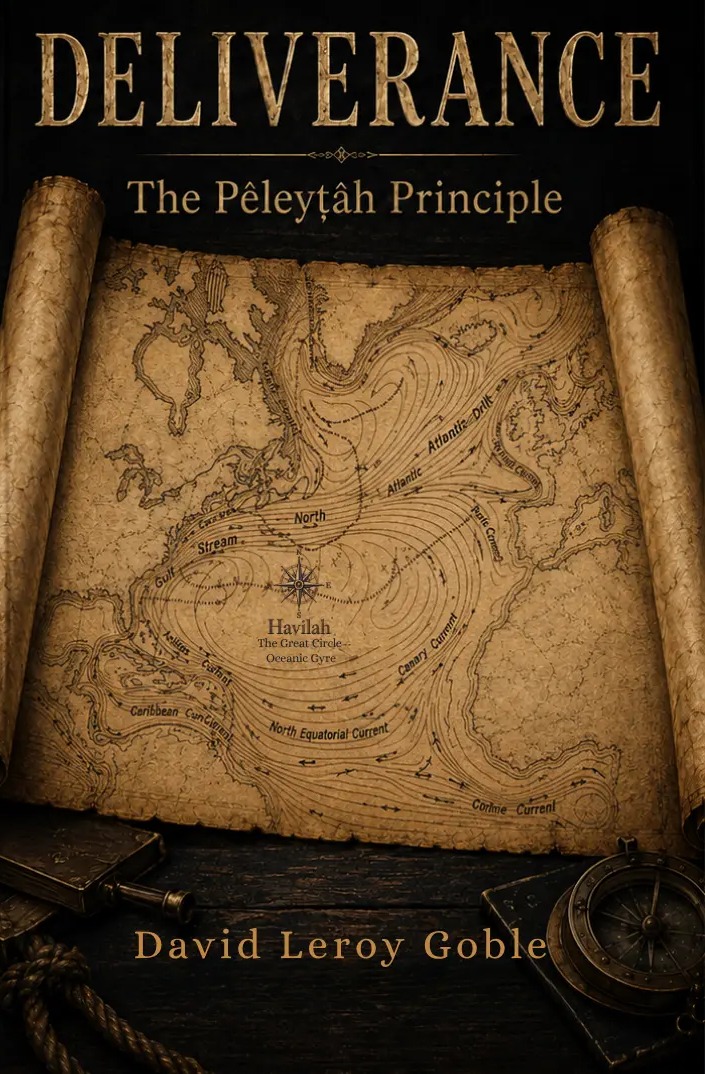
Placeholder synopsis from that observation the book builds a navigational model. The ships of Tarshish, sailing the currents of Havilah the Great Circle Oceanic Gyre could make a three-year round trip westward to the isles afar off and return with the trade winds.
Placeholder synopsis the result is part lexicon, part sea chart, part lament: an argument that a remnant escaped, sailed, landed, and left its language behind in the names of rivers and hills.
עַל־צֹר קִינָה
qîynâh Tsôr ʿal
“for Tyrus a lamentation”
A model for the ships of Tarshish to sail forth on the currents of Havilah, The Great Circle Oceanic Gyre, on a three-year round-trip voyage westward to the isles afar off.
Inside the Book
Key Themes
Linguistic Diffusion
Placeholder how Hebrew roots surface in Siouan, Lakota and Dakota vocabulary and place names.
Ships of Tarshish
Placeholder the Phoenician long-haul fleet, its cargo, crews and three-year voyage cycle.
The Oceanic Gyre
Placeholder Havilah as a circuit of currents rather than a fixed shore, and what that makes possible.
Biblical Cross-References
Placeholder Ezekiel, Isaiah and the lament for Tyre read alongside the geographic record.
Navigation & Charts
Placeholder how ancient mariners could hold a westward course and return home again.
The Remnant
Placeholder pᵉlêyṭâh, the escaped remnant, and what a scattered people carries with them.
Available Now
Choose Your Store
Endorsements
What Readers Say
“Placeholder endorsement a meticulous, patient piece of linguistic detective work that refuses to let an inconvenient pattern go unexamined.”